
CDOF Crypto Review 2026: Is the Chinese Digital Oil Fund Token a Good Investment in July?

The Chinese Digital Oil Fund token, commonly known as CDOF crypto, has resurfaced as a trending topic in July 2026. Renewed geopolitical tensions involving Iran and the United States have pushed energy prices into the spotlight, and traders searching for oil-related crypto assets have increasingly come across this Solana-based token. Its branding as a blockchain initiative focused on petroleum reserve transparency has attracted both curiosity and speculation.
However, interest and credibility are not the same thing. While CDOF coin has generated significant market attention, many investors are still asking the same question: is CDOF a good investment in July, or is it simply another narrative-driven token riding a wave of geopolitical headlines? This article examines what CDOF actually is, whether it has any connection to real oil reserves, and what traders should consider before buying in.
Key Takeaways
- CDOF crypto is a Solana-based SPL token inspired by strategic petroleum reserve concepts, but there is no independently verified evidence it is backed by physical oil.
- The token reached approximately $11.9 million in market cap during its early hype cycle, but multiple listings show inconsistent pricing and liquidity data .
- No verified link to the Chinese government or state oil institutions has been confirmed despite the official-sounding name .
- CDOF remains a highly speculative asset where value is primarily driven by market sentiment rather than proven utility or asset backing.
- Potential investors should verify the official mint address, check liquidity depth, and avoid confusing branding with verified commodity exposure .
What Is CDOF Crypto?
CDOF, short for Chinese Digital Oil Fund, is a cryptocurrency built on the Solana blockchain. The project describes itself as a digital initiative inspired by strategic petroleum reserves and energy security themes. According to its published materials, it applies supply-security and emergency-stock principles to blockchain technology, aiming to create transparent on-chain reporting around reserve-related information .
However, the distinction between branding and reality matters here. Despite the official-sounding name, CDOF does not represent ownership of crude oil, oil storage facilities, or energy-producing assets. Publicly available information indicates the token functions primarily as an on-chain community project rather than a regulated commodity fund . The project itself acknowledges this positioning, describing itself as a "satirical strategic petroleum fund" that holds community rather than crude oil .
The token reportedly has a total supply of one billion coins and operates on the Solana network, benefiting from fast transaction speeds and relatively low fees. The official mint address is CDoFug7K6gYgiotXw1vcyfc9p4rdAxnbbj2DcH5AE4az, which traders should verify before any transaction since copycat tokens have appeared .
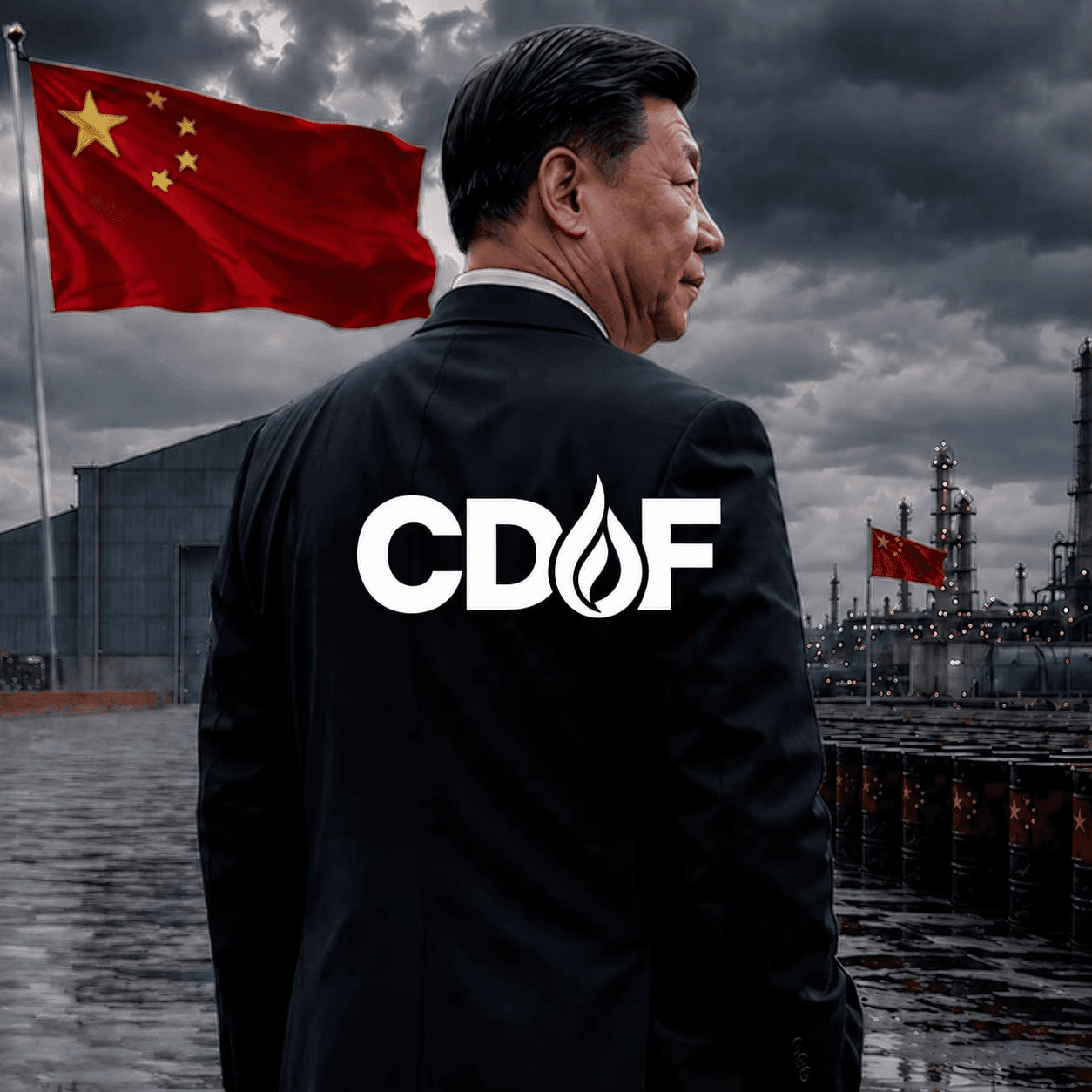
Is CDOF Connected to China or Is It Just Branding?
This is perhaps the most common question surrounding CDOF crypto. The name "Chinese Digital Oil Fund" naturally leads many to assume government backing or institutional involvement. However, based on publicly available information, there is currently no independently verified proof connecting CDOF to the Chinese government, state oil institutions, or national strategic reserve systems .
Project descriptions describe CDOF as an independent blockchain initiative rather than a state-operated fund. Public documentation does not identify founders, executives, or corporate entities linked to the project. While anonymous teams are not uncommon in crypto, the lack of leadership transparency increases uncertainty for investors trying to evaluate long-term credibility .
The safest conclusion is that CDOF appears to be a crypto project inspired by Chinese energy themes rather than a verified China-linked digital fund. Branding alone does not confirm legitimacy or institutional involvement, and traders should treat the connection as narrative rather than fact unless stronger documentation emerges.
Is CDOF Backed by Real Oil?
This is the critical question for anyone considering whether CDOF is a good investment. Based on current public information, CDOF should not be treated as confirmed oil exposure. The token can reference strategic petroleum reserves and public inventory reporting without giving holders a claim on physical reserves, revenue rights, or redemption claims .
A genuine oil-backed product would typically show legal structure, custody arrangements, reserve verification, issuer details, and redemption mechanics. For CDOF, those elements are not publicly documented. The project's oil-reserve language may sound institutional, but that alone does not make it a regulated commodity fund .
This distinction matters for the investment case. If CDOF is mainly a narrative token, traders should evaluate attention, liquidity, and wallet behavior. If it were a verified oil-backed asset, the analysis would also include reserve quality, custody, redemption, and legal rights. Based on currently visible public information, the safer approach is to avoid assuming asset backing.
CDOF Market Data and Price Considerations
CDOF market data presents a confusing picture, which is common for small-cap tokens with fragmented liquidity. Different platforms report widely varying prices and market capitalizations. One source shows a market cap of approximately $9.27 million with the token trading around $0.009 , while another shows $140,000 market cap at $0.000144 . A third source suggests the token reached approximately $11.9 million during its early growth phase .
This inconsistency reflects several factors. The token trades on multiple decentralized exchanges with varying liquidity pools. Different contract addresses may represent different versions or copycat tokens. Trading volume remains relatively thin, which can make prices more volatile and less reliable as indicators of genuine market demand .
Key token details to verify include:
- Blockchain: Solana
- Token Standard: SPL
- Total Supply: 1 Billion CDOF
- Verified Mint Address: CDoFug7K6gYgiotXw1vcyfc9p4rdAxnbbj2DcH5AE4az
- Trading Venues: Jupiter, Meteora, Phantom, and other Solana DEXs
What Are the Main Risks of CDOF Coin?
CDOF carries several significant risks that investors should understand before buying. First, the asset-backing question remains unresolved. The project's oil-themed branding might suggest commodity exposure, but holders do not appear to have legal rights to physical reserves or revenue streams .
Second, liquidity is thin. Low-liquidity tokens often show large percentage moves that look exciting, but the same feature makes them dangerous. If a pool is shallow, a modest buy can push price up quickly, but a modest sell can also drag price down hard. The displayed price may not be the price a trader can actually exit at .
Third, token impersonation is a real concern. When a token name starts trending, similar tickers and fake contracts can appear. Users should never buy CDOF by searching the ticker alone. Verifying the official token mint through project channels and comparing it with the swap interface before confirming any transaction is essential .
Fourth, holder concentration may be an issue. Some data indicates the top wallets hold a significant percentage of supply, which means large holders could move the market substantially if they decide to sell . Finally, the project's transparency is limited. Public information about the development team, governance structure, and legal framework remains sparse, making it harder to evaluate long-term credibility .
Is CDOF a Good Investment in July 2026?
The answer depends entirely on what an investor expects from the token. CDOF may be worth researching, but calling it a good investment would be too strong without clearer proof. The token sits in a high-risk category because its appeal depends heavily on narrative, market attention, and decentralized liquidity .
A practical investor should ask several direct questions: Can the token's supply be verified on-chain? Is liquidity deep enough to exit? Are top wallets concentrated? Are oil-reserve claims backed by legal documents, audits, custody records, and redemption terms? If those answers are weak or missing, CDOF belongs in the speculative bucket .
Short-term traders might find opportunities if geopolitical headlines continue driving interest in energy-themed cryptocurrencies. However, narrative-driven tokens often rise quickly and fall just as fast once attention shifts. For long-term investors, stronger fundamentals, deeper liquidity, and independently verified asset backing would be needed before CDOF could be considered a serious portfolio asset .
Conclusion
CDOF crypto continues to attract attention in July 2026 because its oil-focused narrative aligns with renewed geopolitical tensions and uncertainty in global energy markets. However, increased popularity does not automatically mean stronger fundamentals. Publicly available information still provides limited evidence for some of the project's broader claims, making careful research essential before any investment decision.
Anyone considering CDOF should verify the official contract address, review liquidity conditions, examine holder concentration, assess project transparency, and confirm whether independent evidence supports any claims about real-world asset backing.
FAQ
1. What is CDOF crypto?
CDOF is a Solana-based SPL token branded around the concept of a Chinese Digital Oil Fund.
2. Is Chinese Digital Oil Fund backed by real oil?
Based on publicly available information, there is no verified proof that CDOF tokens represent ownership of crude oil, storage assets, or energy revenue. Investors should not assume asset backing without stronger documentation.
3. Is CDOF connected to the Chinese government?
No. There is no independently verified evidence connecting CDOF to the Chinese government, state oil institutions, or national strategic reserve systems.
4. Is CDOF a good investment in July 2026?
CDOF remains highly speculative. Its value is driven primarily by narrative and market sentiment rather than proven utility or asset backing. Investors should treat it as a high-risk asset and conduct thorough research before buying.
5. What should I check before buying CDOF?
Verify the official mint address (CDoFug7K6gYgiotXw1vcyfc9p4rdAxnbbj2DcH5AE4az), check liquidity depth, review holder distribution, assess token controls, and confirm whether any oil-reserve claims are backed by legal documentation.
Disclaimer: This content is provided for general informational and educational purposes only and should not be considered financial, investment, legal, or tax advice. Nothing in this article constitutes an offer, recommendation, solicitation, or invitation to buy, sell, or trade any crypto asset or use any specific service. Crypto assets are highly volatile and involve a high degree of risk. You may lose some or all of the value of your investment and should not invest funds you cannot afford to lose.WEEX services may not be available in all regions and are subject to applicable laws, regulations, and user eligibility requirements. Please carefully assess risks and confirm local requirements before making any financial decisions.